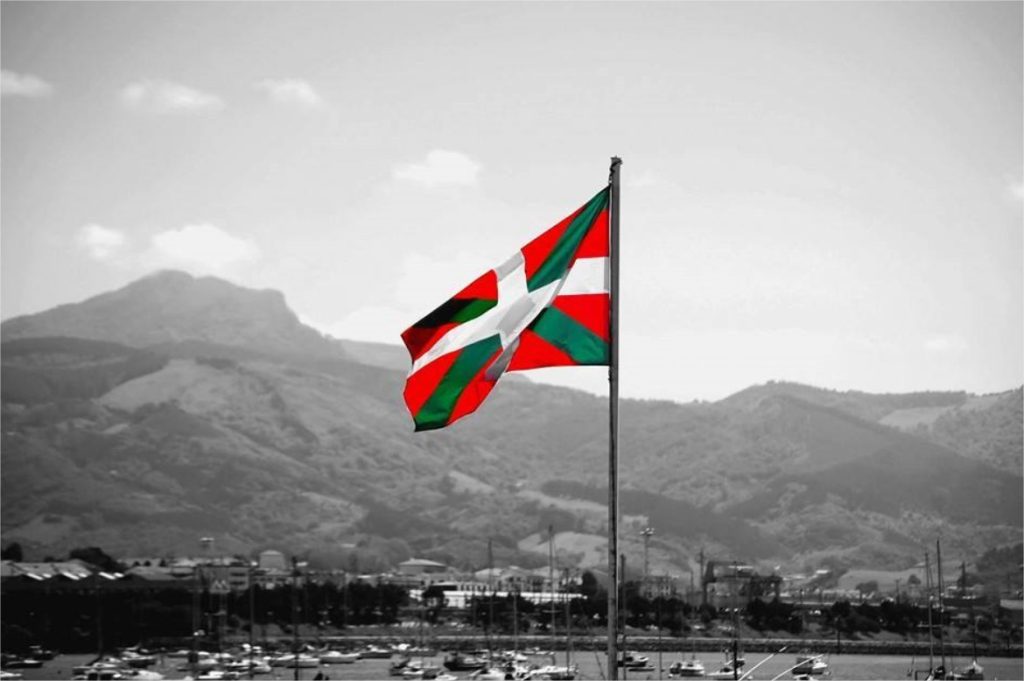
The Basques are the main inhabitants of the Pyrénées-Atlantiques region, and the area they occupy is informally known as the Basque Country. Physically, the Basques are not very different from the peoples of Western Europe. However, they do not speak an Indo-European language. Find out more about the Basque identity in this article.
The economy Basque
The Basque country is rich in iron ore, which has rapidly encouraged the region’s economic development, although it is also renowned for sheep farming. The household, whose buildings, farm and family also play a major role in the Basque economy, in fact, there used to be a traditional law of inheritance which ensured that the descendants of the property remained intact to a single heir or heiress. The individual farmhouse, known as a caserío , was thus at the heart of Basque culture, whose isolation was reflected in a strong sense of family kinship among its occupants.
In addition to being farmers and shipbuilders thanks to iron ore, the Basques were also sailors. They also played an important role in the colonization of the New World.
Basque culture and identity
Although they have a strong allegiance to Roman Catholicism, being among the most observant Spanish Catholics, animism remains a predominant tradition.
At over the centuries, Basque traditions have changed as a result of the region’s strong urban and industrial development . Then, emigration to France and the Americas gradually reduced the population living in the caseríos. Basque customs and language began to disappear particularly in the industrial towns. Only a small community speaks the language, found in the mountainous regions, fairly remote from the rest of the country. By the end of the 20th century, almost all Basques spoke French or Spanish.
Basque primitive history
We don’t know exactly the early history of the Basques, which to this day remains a subject of speculation. However, the Roman authors report that the Vascones tribe lived in a place similar to the province of Navarre. Apparently, they resisted the Visigoths, Normans, Franks and Moors who settled in the Ebro valley. Roland’s song says that the Moors cut off the rearguard of Charlemagne’s army at the battle of Roncesvalles in 778, which is quite wrong, because in reality, it was the Basques.
Basque autonomy
In the 10th century, Navarre incorporated the Basque territories into its kingdom. At the end of the political turmoil of the Middle Ages, the provinces of Alava, Vizcaya and Guipuzcoa became part of Castile and Aragon. Although there has been a merger, the Basques have always retained their economic autonomy, whether in France or Spain.
The Basques showed a fierce attachment to their autonomy, which led them to support Don Carlos’ cause in 1830, as Spain wanted to abolish their local privileges. Unfortunately, this unsuccessful struggle led the government to abolish the fueros even if the Basques managed to retain a certain level of local autonomy.
The Spanish Republic
The advent of the Spanish Republic in 1931 divided the political aspirations of the Basques: Guipúzcoa, Vizcaya and, to some extent, the province of Álava were prepared to work for a status of relative autonomy within the republic and, for this reason, remained loyal to it despite its anti-Catholic policies. Navarre, for its part, was keen to see the republic overthrown and provided one of the strong points of the 1936 nationalist rebellion and some of its best Carlist troops. The city of Bilbao, which had always been a bastion of liberalism against the Carlists, became both the center of republican government and of Basque nationalism. The fighting lasted until September 1937 and outside Spain, is best remembered for the bombing, allegedly by German aircraft, of Guernica, the traditional gathering place of the province of Vizcaya and symbol of the Basque nation in nationalist eyes. After the war, many Basques went into exile as Francisco Franco’s government abolished the Basques’ special privileges.
Find more interesting facts about Foie Gras and the Basque Country on our Blog and tasty recipes in the Recipe section of our website!