
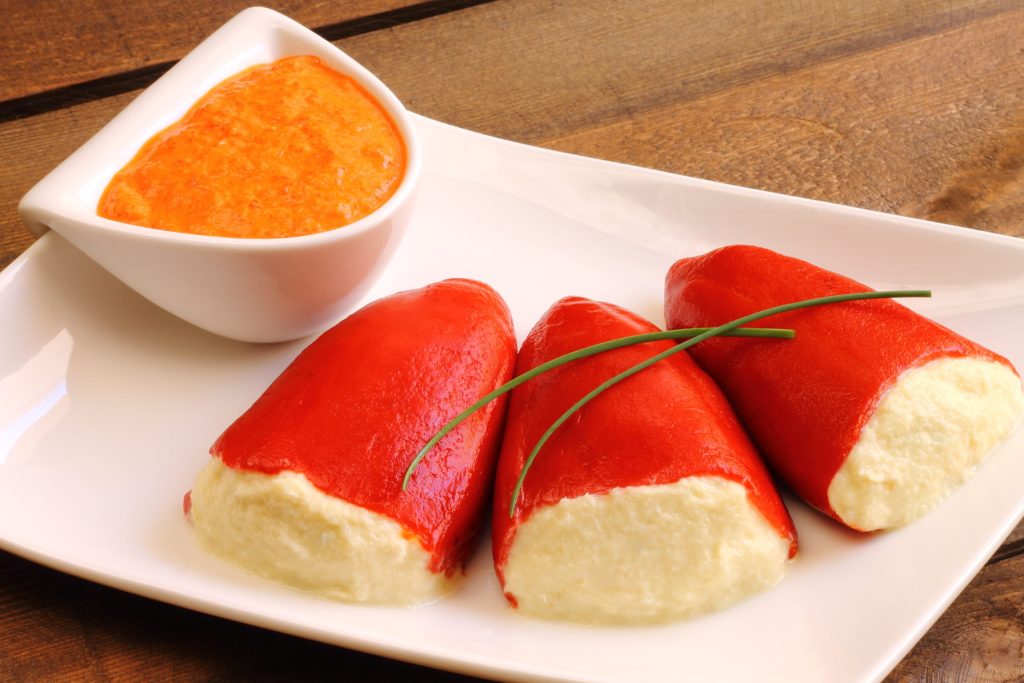
This pepper is a member of the bell pepper family traditionally grown in Lodosa, Navarre, but originally comes from South America. Christopher Columbus brought it to Europe on his first voyage. Over time, several types of bell pepper developed in Spain, including the piquillo.
The non-stinging pepper
Although it’s a chili pepper, it doesn’t taste spicy at all. On the contrary, it’s mild and provokes no heat or tingling in the mouth. In fact, if you measure piquillo on the Scoville scale, it measures 500 to 1,000 Scoville heat units, making its heat almost undetectable. The piquillo is essentially a sweet bell pepper. Approximately 2.5 to 3 inches long, it turns bright red when ripe. The piquillo is recognized by its triangular shape and finely curved tip, resembling a bird’s beak – hence the name!
How do you eat it?
Like the bell pepper, the piquillo has a thicker skin, which gives it a sweeter taste when eaten raw. Piquillos can be cooked like peppers, and taste much better when cooked or roasted.
Typically, piquillo is marinated, fried or roasted. Because of its size and substance, it is most often used to prepare stuffed peppers. Alternatively, it can be used to complement the flavour of a soup or sauce.
The piquillo can be preserved in olive oil for a short time, but is also excellent if grilled over an open fire.
Recipe simple piquillo
Below are the ingredients for a simple, yet delicious piquillo recipe. :
- A box of piquillo
- A can of tuna
- 4 tablespoons tomato sauce
- 1 cooked egg
- From wine vinegar
- Oil, salt and parsley
Place two piquillos and the tomato sauce in a bowl and mix with a mixer. Pour the tuna and crumbled egg into the sauce. You can add whatever you like. Now stuff the remaining peppers with a small spoon. To finish, pour the oil, parsley, vinegar and salt over the top of the stuffed peppers. Enjoy your meal!
Find more interesting facts about Foie Gras and the Basque Country on our Blog and tasty recipes in the Recipe section of our website!