

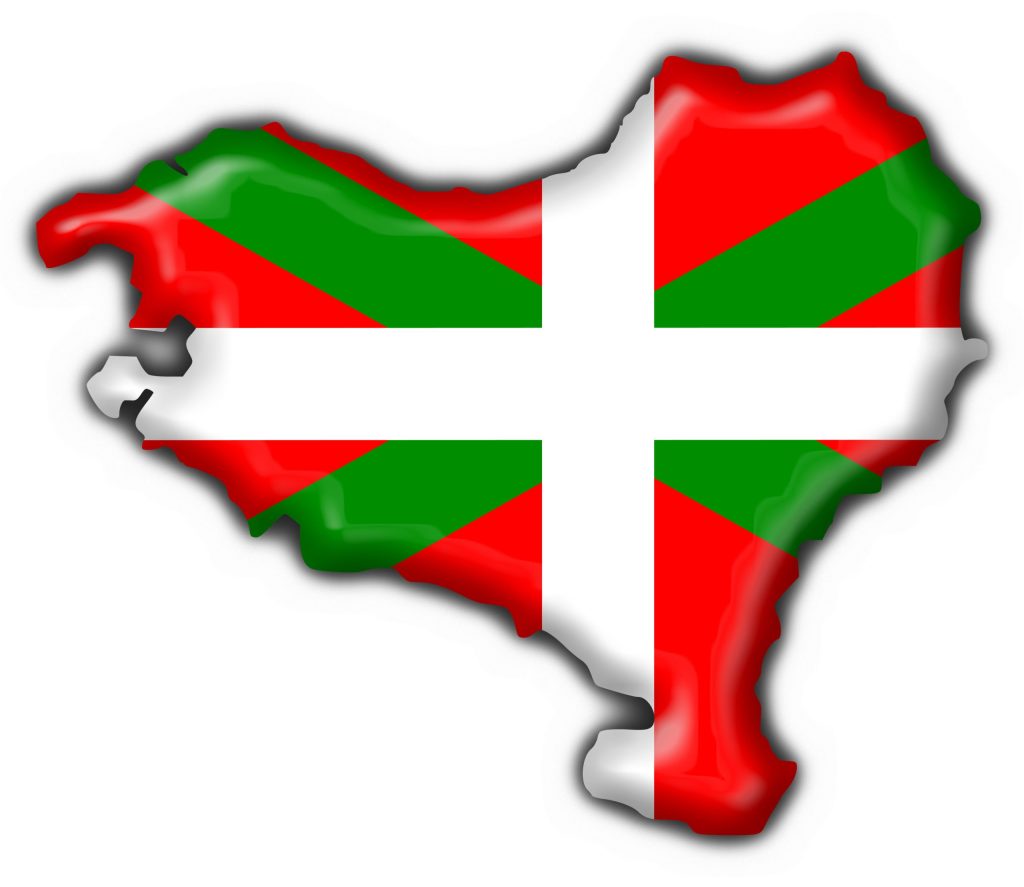
The flag is a strong symbol for the regions of France. And the Basque Country is no exception. Through its shapes and colors, the Basque flag rallies an entire region behind .
The Basque Flag
What is the history of the Basque flag and what does it represent?
Its colors
Called ” ikurriña ” (but also ” ikurrina “), the Basque flag is essentially dominated by the color red. It also features two white lines forming a cross, on another green cross. The white cross represents God and Catholicism. The green cross is that of Saint-André, which represents customary law. Here, the order of the colors is important, since the green cross symbolizes ancient laws, which are the guarantors of the Basque people’s freedom. And the Christian cross (the white cross) tops it all!
Its significance
The Basque flag is used informally today at as a cultural symbol of the Basque Country. It groups together all the regions of the Basque Country, whether Spanish or French. Today, this flag is the official emblem of the autonomous community of the Basque Country, located in Spain. This has been the case since its acquisition of autonomous status in 1979. In France, the Basque flag has no official status. However, institutions use it on a regular basis .
Its history
The Basque flag dates back to the end of the 19th century, when Sabino Arana founded the ” Euskeldun Batzokija ” company, the origin of the Basque National Party. The Arana brothers are the originators of this flag. Originally, they had designed one for each Basque territory. But it was the Vizcaya flag that all Basques recognized and adopted. It is the symbol of Basque freedoms, and the people who recognize it have a strong attachment to it.
Find more interesting facts about Foie Gras and the Basque Country on our Blog and tasty recipes in the Recipe section of our website!